What is TrUDL?
To understand TrUDL we must understand both translanguaging as a concept and the Universal Design for Learning. TrUDL is the intersection of these ideas, and its main goal is full inclusion.
The foundation of the Universal Design for Learning, or UDL, comes from what scientists know about the human brain, no two brains are alike. This design recognizes that and was created to help educators address the diversity in learning. UDL is a pedagogical process that fosters inclusive classrooms by addressing the diverse needs and abilities of all students. It effectively prepares learners by supporting, nurturing and encouraging their natural curiosity. UDL aims to support and empower learner agency using purposeful, reflective, resourceful, authentic, strategic and action-oriented approaches. Creating both meaningful and challenging learning opportunities for students is what UDL aims to do.
UDL created an approach that proactively anticipates scaffolds in three main areas–engagement, representation and action and expression–to ensure curricula is accessible to all. Each area provides ample methods educators can use to enforce learner agency.
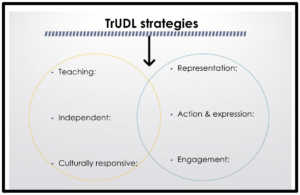
I previously discussed translanguaging as a theory to understanding communication and language, where students draw upon their full linguistic repertoire to improve their comprehension. When you combine translanguaging and UDL you get TrUDL. The basis for TrUDL’s development was to make sure the idea that emergent bilinguals being labeled as disabled came to an end, and instead incorporate the values of UDL and translanguaging together to offer a framework to establish and sustain “linguistically inclusive” and “academically expansive” classrooms. TrUDL affirms that when teachers employ multilingual, multicultural, and multimodal strategies, student accessibility increases on account of language and learning style. TrUDL also emphasizes the understanding that multilingual and multimodal practices that are self-directed increase students’ abilities to engage in independent learning. Finally, TrUDL declares that when classroom practices are culturally sustaining, it will lead to more meaningful and authentic student engagement.
How Can TrUDL Help Emergent Bilinguals?
Since TrUDL’s main idea is that educators must address the diverse needs and abilities of all students, it’s safe to say that utilizing it in the classroom will without a doubt help to create an effective learning environment for emergent bilinguals. Emergent bilinguals are part of that diversity and with TrUDL’s values in place, success for these students is the main concern.
Example of TrUDL in Lesson Plan
With my extensive background in Theater Arts, I was drawn to the UDL guideline of Engagement, specifically its design options for “Welcoming Interests and Identities” under the consideration of nurturing joy and play. Learning environments that support a student’s imagination and playfulness by incorporating a variety of creative opportunities into the lesson plan can lead to increased engagement with the content, as well as provide an outlet for students to express themselves.
Integrating this concept into the TrUDL framework provides various opportunities to incorporate it into lesson planning. For example, an interactive storytelling with multilingual resources. The activity would have students in small groups or partnerships co-create a story using both their home language and English. To connect this activity with the content area there could be specific stories or characters that must be represented. When preparing for this lesson, the teacher may develop a list of historical and cultural events the students can choose from to help inspire their stories, making sure to represent the makeup of their classroom in these events. The students can choose to tell the story through drawings, acting out scenes, or using digital tools that allow for sound and visuals. This activity allows for students to translanguage and at the same time fosters a sense of play and creativity. It encourages engagement by allowing students to play with language and storytelling and makes learning joyful.
The opportunities for students to use translanguaging, make personal and meaningful connections with the content and be creative while doing so is a way to incorporate TrUDL in lesson planning.